- On sale!




Same-day dispatch · Delivery 3–5 days · 44 countries across Europe
Same-day dispatch · Delivery 3–5 days · 44 countries across Europe
(€50.97 Par kg)
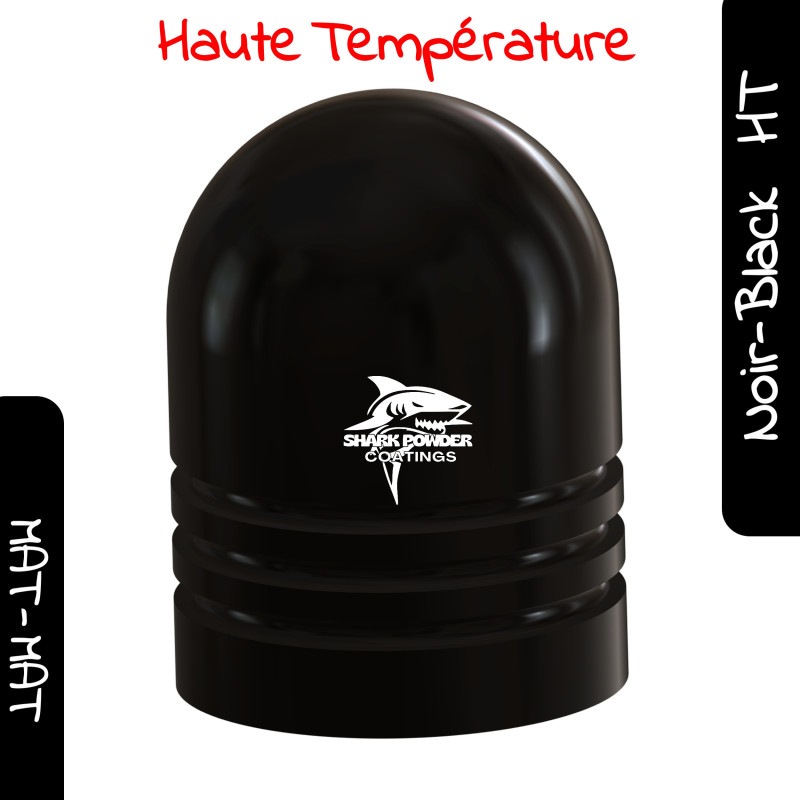
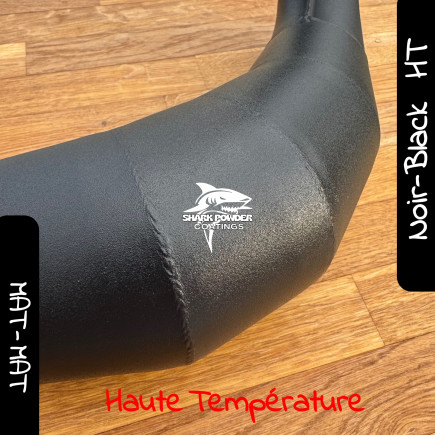
Deep matt black, 5-15 gloss, rated for 550 °C in service. Tested with no cracking and no film detachment after 2 hours at 600 °C. For anything that gets hot: exhausts, barbecues, stoves, cast iron and steel parts.
1 kg pack. Two parameters to respect: 40 to 60 micron film, cure 20 min at 210 °C part temperature.
 Security policy(edit with the Customer Reassurance module)
 Delivery policy(edit with the Customer Reassurance module)
 Product returns (distance selling) within 14 days, Return shipping at customer’s expense. Opened/used products: reduced refund or refusal if depreciated.
Most black powders survive around a hundred degrees in continuous service. This one is built for 550 °C. Tested at 400 °C for 24 hours and at 600 °C for 2 hours: no cracking, no film detachment, adhesion retained.
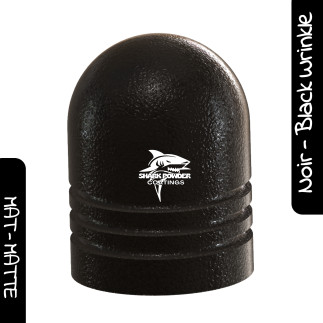
Deep matt black, 5-15 gloss, slightly textured feel. Understated and technical, no shine. This is the finish for manifolds, exhaust systems, barbecues, stoves and every cast iron or steel part that heats up.
🎨 Colour: Black
Gloss level: 5-15, matt
Density: 2.1 ± 0.1 g/cm³
Recommended film thickness: 40 to 60 microns
🌡️ Cure (object temperature): 20 min at 210 °C
♨️ Service temperature: up to 550 °C
✓ 400 °C for 24 h: no cracking, no detachment, adhesion 0
✓ 600 °C for 2 h: no cracking, no detachment, adhesion 0
✓ Adhesion: ISO 2409, 2 mm cross-cut, result 0/1
✓ Hardness: ASTM D3363, 2H
Application: manual or automatic electrostatic spray
Storage: dry and cool, at least 6 months below 25 °C
📦 Pack size: 1 kg
This is where everything is decided, and it catches most people out. If you normally cure your polyesters at 180 or 200 °C, this product will not follow. It needs 20 minutes at 210 °C, and that is the temperature of the part once heated through, not the thermostat reading, which measures air.
⚠️ What happens if the cure is not respected. An incomplete or incorrect cure causes a difference in colour, a difference in gloss and a degradation of the coating properties. In other words, an under-cured part may look acceptable at first and still fail to hold the rated 550 °C.
On a heavy part such as a cast iron manifold, the gap between oven air and metal is large and slow to close. Temperature indicating labels stuck on the part cost a few euros and tell you exactly what the part actually saw. On this product, it is the best money you can spend.
The recommended window is 40 to 60 microns, noticeably thinner than a standard topcoat. The instinct to load it on for good coverage is a mistake here: on a part heading for several hundred degrees, a thicker film moves more with thermal expansion and fatigues sooner.
Two light passes beat one heavy pass. Check with a gauge if you have one.
Not optional on this product. All traces of oil, grease, scale, rust and grease pencil must be removed. We strongly recommend multi-stage cleaning followed by blasting, roughness Rz 25 to 35, to reach the stated performance.
On a part that has already seen fire, a manifold or an exhaust line, add a degassing bake before coating. Residues trapped in the metal come back out during curing and create craters.
⚠️ Do not apply epoxy primer underneath. A standard primer cannot survive the service temperature of this product: it would degrade under the topcoat and take everything with it. This powder goes directly onto properly prepared bare metal. It is the only powder in our range for which our Epoxy Primer is not recommended.
Can I cure it at 180 °C like my other powders?
No. It needs 20 minutes at 210 °C part temperature. Below that the coating does not fully cure: colour and gloss can drift and the heat resistance will not be there. This is the number one mistake on this product.
My part changed colour or gloss after curing, why?
Almost always an incorrect cure: part temperature never reached, time too short, or an overloaded oven that never came up. Check with temperature indicating labels on the part, not with the thermostat.
What film thickness should I aim for?
40 to 60 microns. Thinner than a standard powder. Do not overload.
Do I need a primer?
No, and definitely not a standard epoxy primer, which would not survive the service temperature. Apply directly onto prepared, blasted bare metal.
Does it really hold up on an exhaust system?
The product is rated for 550 °C in service and was tested for 2 hours at 600 °C with no cracking and no detachment. Real performance depends on preparation, film thickness and cure, so it depends on you. Run a test on an offcut before committing a part you cannot remake.
Can I clear coat over it?
No. No clear coat in our range survives these temperatures. The matt black is the final finish.
Professional or skilled DIY use. Recommended PPE during application: gloves, goggles, P2 dust mask. Keep away from ignition sources. Store in closed, dry, cool container. Safety data sheet available upon request.
Specific References
Deep matt black, 5-15 gloss, rated for 550 °C in service. Tested with no cracking and no film detachment after 2 hours at 600 °C. For anything that gets hot: exhausts, barbecues, stoves, cast iron and steel parts.
1 kg pack. Two parameters to respect: 40 to 60 micron film, cure 20 min at 210 °C part temperature.
(€50.97 Par kg)