- On sale!


Same-day dispatch · Delivery 3–5 days · 44 countries across Europe
Same-day dispatch · Delivery 3–5 days · 44 countries across Europe
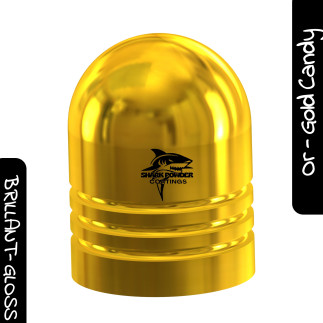
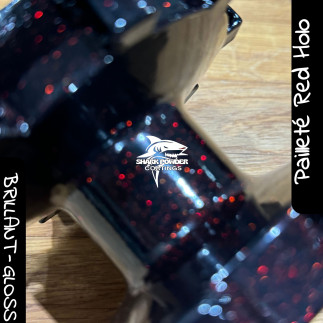
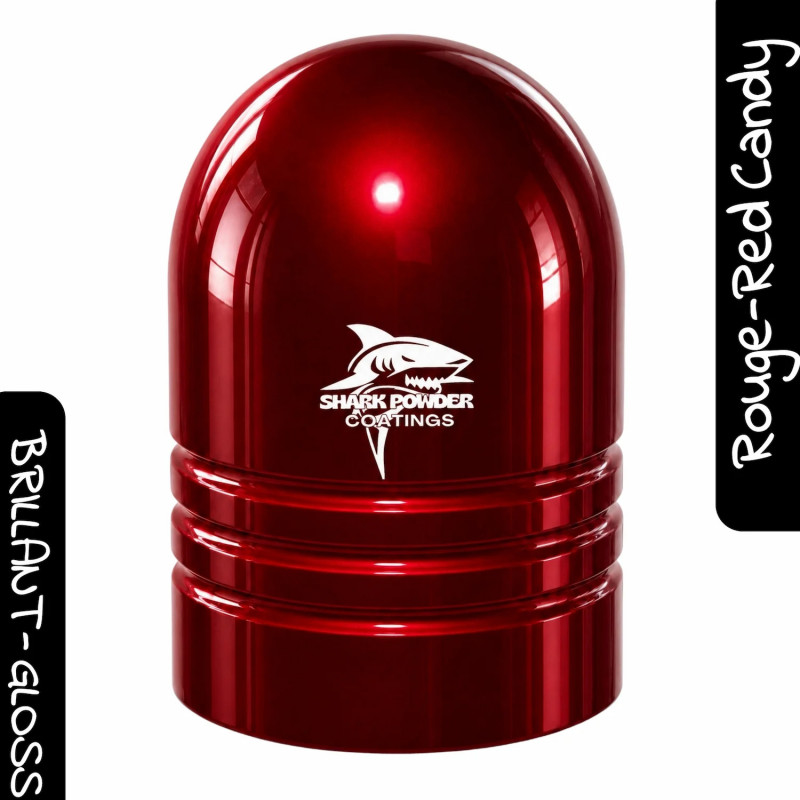
Translucent red candy, deep gloss, applied over a base coat. This is a TGIC-free tinted clear: it does not lay the colour down, it reveals it. Over Chrome Silver, a mirror effect. Over Satin Aluminium Grey, a metallic effect.
0.5 / 1 / 2 kg packs. 60 to 90 micron film, cure 10 to 20 min at 180 °C part temperature. Rated for outdoor use in a single coat, no clear coat needed.
 Security policy(edit with the Customer Reassurance module)
 Delivery policy(edit with the Customer Reassurance module)
 Product returns (distance selling) within 14 days, Return shipping at customer’s expense. Opened/used products: reduced refund or refusal if depreciated.
A standard powder lays a colour onto the part. This one is a tinted clear: it is translucent. Light passes through the film, hits the base coat, travels back up through the red and comes out coloured. That round trip creates the depth, the wet look and the raspberry undertones anyone who has seen a real candy will recognise.
One direct consequence, and it is all you need to understand before you start: this red never works alone. Its final colour depends on what sits underneath and on the film thickness you lay down. Control those two things and the result is spectacular.
🎨 Colour: Translucent candy red, raspberry undertones
✨ Appearance: Smooth gloss, mirror over Chrome Silver, metallic over Satin Aluminium Grey
Type: TGIC-free polyester, tinted clear
Recommended film thickness: 60 to 90 microns
🌡️ Cure (object temperature): 10 to 20 min at 180 °C
🌡️ Other possible cycles: 30 to 40 min at 170 °C, or 8 to 16 min at 200 °C
☀️ Outdoor: excellent light and weather resistance in a single coat
Application: electrostatic
Substrates: steel, galvanised steel, aluminium
Storage: dry and cool, 24 months below 30 °C
📦 Pack sizes: 0.5 kg, 1 kg, 2 kg
A candy reveals whatever it covers. Two base coats give two different results, and we stock both.
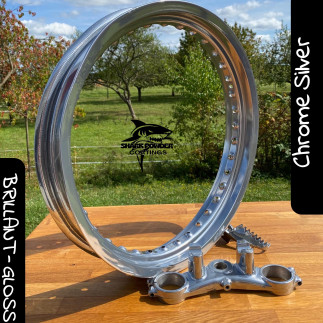
Over our Chrome Silver: mirror effect. The most spectacular result. A deep red that throws light back like tinted chrome. This is the combination where the product gives its best.
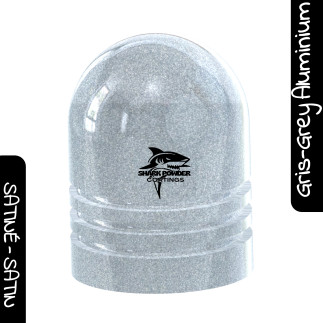
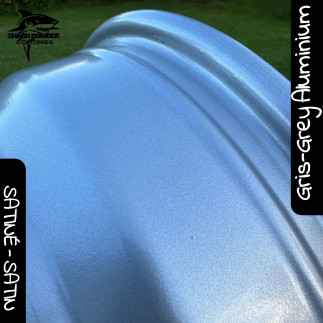
Over our Satin Aluminium Grey for wheels: metallic effect. The reflection is more restrained, the red denser, and the metallic grain stays readable under the film. A more understated result, close to an OEM shade, which works very well on a factory wheel.
Over a base that is neither of those two, the result changes again. Over black the red goes much darker. Over white it drifts towards a milky pink. Neither is a fault in the product: it is how a candy works.
The base coat must be cured before the candy goes on. You do not stack two uncured powders.
On a tinted clear, thickness does not control coverage, it controls colour intensity. The window is 60 to 90 microns, and the result at 60 is not the result at 90: the thicker the film, the deeper the red and the more the base disappears under the colour.
So the rule is simple and not negotiable: consistency above all. Cross passes, constant gun distance, constant arm speed, the same number of passes on every part of a set. Do a set of wheels in one session, same settings, same powder.
On an opaque powder, a test panel is a nice-to-have. On a candy it is a process step. Before coating a part you cannot remake, prepare a panel with exactly the intended build: same base, same thickness, same cure. You approve the real colour before you commit, not after.
Do two or three at different thicknesses, one around 60 microns, one around 90. You will see the difference for yourself, and you will know where to aim.
Many candies need a clear coat to survive outdoors. Not this one. It is formulated for exterior use and delivers excellent light and weather resistance in a single coat. One less coat to apply, one less cure, one less station in your schedule, and one less chance of a defect.
The candy red is the final finish. You can go straight to demasking.
⚠️ Do not apply this product directly over a primer. A transparent coating does not go over a primer: it needs the effect base coat, chrome or aluminium, cured beforehand. Without it you get a transparent red with no depth, and the primer shows through.
These figures are rarely published on a consumer powder datasheet. We publish them because they are good.
✓ Adhesion: class 0, ISO 2409. The best result on the scale.
✓ Impact: good at 2.5 joules, ISO 6272-2
✓ Cupping: good at 5 mm, ISO 1520
✓ Bending: good at 5 mm, ISO 1519
✓ Hardness: compliant, no penetration, ISO 1518-1
✓ Salt spray 500 h: no creep beyond 3 mm, ISO 9227
✓ Humidity 1,000 h: no blistering, no gloss loss, ISO 6270-2
✓ Reaction to fire: A2-s1,d0 to EN 13501-1
On a translucent shade, a slight difference between production batches is normal and unavoidable. That is true everywhere, on every candy.
The fix is simple: order in one go the quantity your whole job needs. A set of four wheels plus the calipers can be worked out beforehand. Coming back to one part six months later with a different bag means risking a visible mismatch on the car.
All traces of oil, grease, scale and oxidation must be gone before coating. On a candy, preparation counts double: any flaw in the base coat comes straight back through the transparent film and shows.
On galvanised steel, use zinc phosphating, chromic conversion or sweep blasting. On an alloy wheel that has already been painted, strip it fully and blast it. On a porous substrate, add a degassing bake before the base coat: trapped residues come back out during curing and create craters the candy will not hide.
Can I apply it straight onto bare metal?
Technically yes, but you lose the candy effect. The product is translucent: over bare metal you get a transparent red with no depth and no reflection. The base coat is not a styling option, it is what produces the result. Chrome Silver for the mirror, Satin Aluminium Grey for the metallic.
Do I need a clear coat on top?
No. The product handles outdoor use in a single coat, light and weather included. It is the final finish.
Can I use a primer underneath?
Not directly under the candy. A transparent coating does not go over a primer. The effect base coat, chrome or aluminium, must be applied and cured first.
What film thickness should I aim for?
60 to 90 microns. The higher you go in the window, the deeper the shade. The absolute figure matters less than applying the same figure to every part of a set.
What curing temperature?
10 to 20 minutes at 180 °C part temperature, not the thermostat reading, which measures air. Two other cycles work: 30 to 40 minutes at 170 °C, or 8 to 16 minutes at 200 °C. On a heavy alloy wheel, temperature indicating labels stuck on the part cost a few euros and settle the question.
Why do my two parts not match exactly?
Two possible causes. A film thickness difference, the most common one, which you fix at the gun. Or two bags from different batches, and there is no fix for that: order the whole job in one go.
Does it contain TGIC?
No. TGIC-free formulation.
Professional or skilled DIY use. Recommended PPE during application: gloves, goggles, P2 dust mask. Keep away from ignition sources. Store in a closed container, in a dry and cool place below 30 °C. Safety data sheet available upon request.
Specific References
Translucent red candy, deep gloss, applied over a base coat. This is a TGIC-free tinted clear: it does not lay the colour down, it reveals it. Over Chrome Silver, a mirror effect. Over Satin Aluminium Grey, a metallic effect.
0.5 / 1 / 2 kg packs. 60 to 90 micron film, cure 10 to 20 min at 180 °C part temperature. Rated for outdoor use in a single coat, no clear coat needed.